

Archive
-
3 Ways to Use Flashcards in Your Music Classroom
Comments Off on 3 Ways to Use Flashcards in Your Music ClassroomFlashcards have to be one of the most useful resources a teacher can have in their classroom!
Use them to save you having to write on the board or let the kids use them to recognise – and match the visual symbols to – what they hear. Use them to play a game with, to create with and to dictate from!
Flashcard activities can easily form a part of every music lesson, regardless of what stage of learning your class is at and are a great way to prepare for a transcription activity or any activities that use the elements targeted in the flashcards themselves.
Read on for lots of ideas for how to use Flashcards along with links to some great activities, available via the Music Teachers’ Digital Library (note, some are free, but others are only accessible with a subscription).
Sightreading
- Use flashcards that ONLY include known rhythms or pitches.
- Students should keep a steady beat (quietly) throughout the activity.
- Hold flashcards so students can see one at a time.
- Allow inner hearing time for each flashcard.
- Pointing to each beat on the card can help students follow.
- This video is an example of sightreading from Rhythmic Flashcards.
Click here to access Crotchets, Quavers, Crotchet Rests & Semiquavers Flashcards.
Sightreading Variations
- Poison Rhythm/Melody – where one rhythm (e.g. semiquavers) or pitch (e.g. so) is chosen and students must NOT say/sing those out loud (inner hear instead).
- Poison Rhythm/Melody – where one rhythm (e.g. crotchets) or pitch (e.g. re) is chosen and students must NOT say/sing those out loud (inner hear instead).
- Halvies – one half of the class say the rhythm name of the rhythm (e.g. crotchets) or pitch being focused on (e.g. la) while the other half say all else.
- Read and Remember – students memorise the first card being shown, when the second card is shown they have to say the rhythm names or sing the solfa/letter names of the first card while memorising the second and so on.
- FCBP – (Flashcard Body Percussion) choose a different action for each rhythmic element (or pitch) on the cards e.g. a crotchet may be clapped while semiquavers may be clicked and so on. Students inner hear the rhythm names as they perform the body percussion actions and the teacher keeps a steady beat on claves or similar.
Build It Up
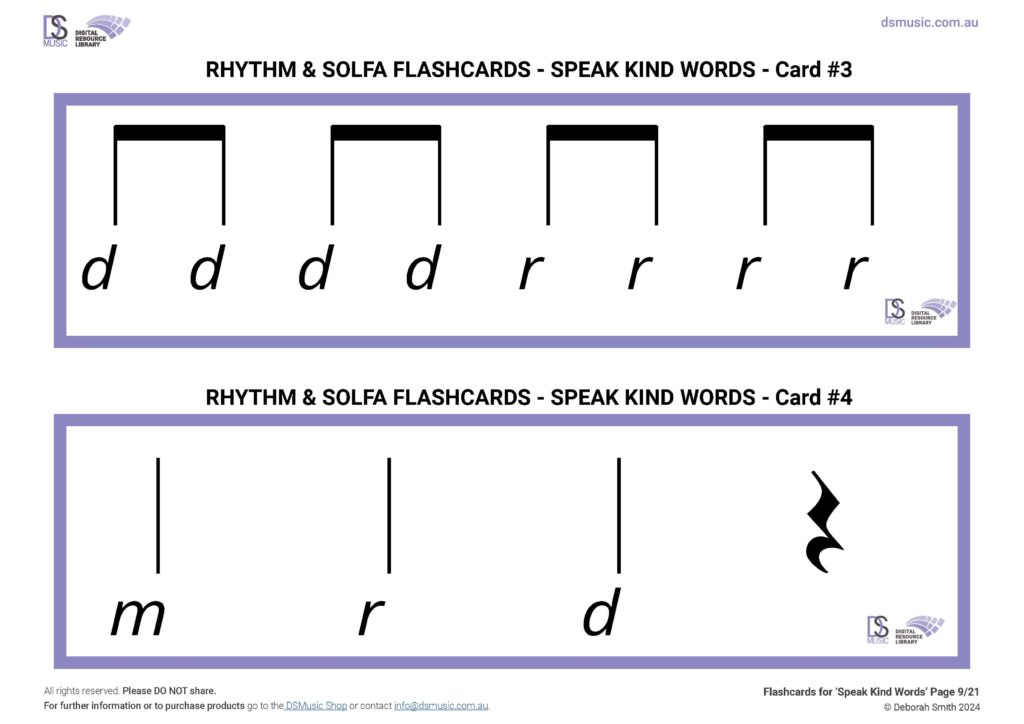
- Have flashcards with individual known rhythms (see Simple Time flashcards here) or pitches.
- Warm up the class by singing several songs that only use the rhythms and/or pitches on the individual rhythmic flashcards.
- Divide the class into teams and provide each team with a set of these flashcards. For example, 12 x crotchet cards, 8 x pairs of quaver cards and 5 x crotchet rest cards will ‘make’ most Crotchets, Quavers and Crotchet Rests songs.
- Announce the name of the song you have chosen and start a stopwatch. The teams begin to create the rhythm and/or melody of that song using the above cards.
- When one team thinks they have it correctly the clock is stopped and all teams cease working.
- The team that thinks they have it sing the rhythm names/solfa of the song. If correct, they win, if incorrect, the clock is started again and the activity continues until one team has the song correctly.
Click here to see an example of this practice activity using flashcards.

How can DSMusic resources support you?
There’s a ever-growing collection of flashcard resources in the Music Teachers’ Digital Library (MTDL), so click here to view these.
There’s also an extended version of this blog post available to MTDL subscribers with a lot more suggestions, activities, links and strategies for finding the fun in flashcards!

And remember…
Whether you’re looking for a way to gamify rhythm, throw in a few brain breaks or offer your classes lots of different ways to practice these musicianship concepts, flashcards are a great go-to!
Happy flashcarding, everyone! – Deb
-
Top 10 Videos for Scales & Key Signatures
Comments Off on Top 10 Videos for Scales & Key Signatures
The aim of the game here at DSMusic is sequential music literacy and really knowing. This means step-by-step teaching and learning of music aural and music theory concepts, followed by the practicing of these in a variety of ways.
Scales and key signatures (tonality) are a vital part of any music literacy approach. They pop up everywhere – whether you’re using them visually when sightreading, aurally recognising them in the senior years or memorising them to play (or write) in exams.
They’re the cornerstone of much of what we do as musicians in performance, creative pursuits and come assessment day, so it’s vital to incorporate them early and often.
Aside from using mnemonics to remember your key signatures, or hours and hours of muscle memory for reeling them off when you need to, how can we practice and really know our scales?
To give you a bit of a starting point, here are 10 videos that combine teaching, learning and the application of all that — theory into practice.
DEB’S TOP 10 DSMusic Scales & Key Signatures Teaching & Practice Videos
1: Start with the basics.
Try beginning with the concept of key signatures – why we use
them and what they tell us, before tackling finding tonalities visually and aurally.2: It’s all relative!
Explore two basic scales forms – Major and natural minor – and discover
how these work and how they’re related.3: Let’s get singing scales & practicing them!
Now that we’ve got a few videos under our belt, it’s time to use
sing through some different scales to build our aural awareness.How can DSMusic help?
If these ten videos aren’t quite enough to cover your
scales & key signature-related needs, remember there’s a bunch
more available for free, so carve out some time to deep-dive
on the DSMusic Vimeo & YouTube channels!Happy watching! – Deb
-
4 FREE compositional device resources for music performance analysis
Comments Off on 4 FREE compositional device resources for music performance analysisAs part of the 2023-2027 VCE Music Study Design, music analysis or music performance analysis now incorporates four compositional devices. These, alongside the elements of music, offer students the means to identify and discuss how performer’s achieve intended effects and characters. This, in turn, supports students with their own development as musicians and performers; fostering language and an awareness of these techniques.
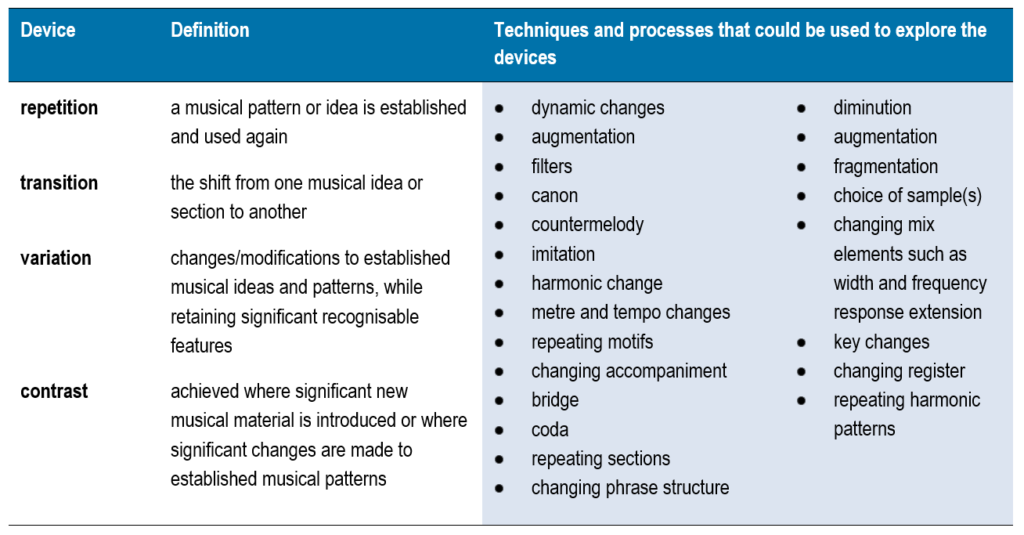
Pg16, VCE Music Study Design | Victorian Curriculum & Assessment Authority The four devices outlined by the Victorian Curriculum & Assessment Authority (VCAA) include contrast, variation, transition and repetition.
VCAA also provides ways for students to explore these within excerpts, taking something that might initially feel a little abstract and grounding it in a music analysis aural space.
It’s important to refer to the VCAA definitions for these, as they do have to relate specifically to the unifying theme of ‘musical ideas (or patterns)’. Often, too, these devices are incorporated into multi-part questions where they are either the focus, or an option for discussing how they impact on the character created.
So, let’s go through these a little more now.
Compositional Device #1: CONTRAST
As you can see above, VCAA defines contrast as “significant new musical material” or “significant changes to established patterns”.
It can be helpful then to think of this as ‘obvious’ changes within an excerpt which can often be easier to hear. This might include a change in key/tonality (e.g. major to minor), changes in tempo or dynamics (e.g. soft to very loud) or contrasting articulation techniques (e.g. staccato and then legato).
Although these more obvious elements and techniques can be simpler to detect, contrast can also be explored by considering texture, instrumentation and melodic contour. Note the specified timings below and see if you can hear this in the Bon Iver excerpt.

Click to hear this on Youtube Or, perhaps, you could listen out for contrast in phrasing or the instrument registers being used, like with this saxophone quartet example.

Click to hear this on Youtube Compositional Device #2: VARIATION
As you can see above, VCAA defines variation as “changes to establish musical ideas and patterns” that very importantly, “retain significant recognisable features.”
It might be tempting to think about this very similarly to contrast (changes!) but for instance, where we might talk about contrast in relation to the use of different articulation approaches or shifts in texture overall within an excerpt, with variation we would instead discuss how the performance of a main thematic idea varies each subsequent time we hear it.
Just like with contrast, we can identify variation through elements, such as articulation and melodic contour. Note the specified timings below and see if you can hear this in the Paganini excerpt.

Click to hear this on Youtube Or, perhaps, you could listen out for texture, instrumentation and tone colour, like with this boy wizard example.

Click to hear this on Youtube Compositional Device #3: TRANSITION
As you can see above, VCAA defines transition as “the shift from one musical idea or section to another.”
So this device has a lot to do with transitional passages in music, connecting ideas together, like a bridge in a song. However, it can also be a little more subtle, such as a passage where modulation occurs or when the excerpt shifts through the use of a sound production transition effect like a wipe or vocal riser.

These passages can be lengthy within an excerpt, or a little shorter, and can be identified by listening for texture, rhythm and phrasing. Note the specified timings below and see if you can hear this in the Pharrell Williams excerpt.
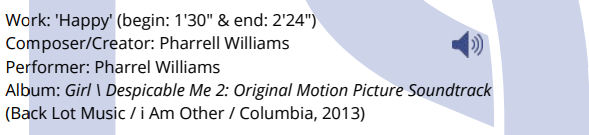
Click to hear this on Youtube Or, perhaps, you could listen out for transition in instrumentation, melodic contour or the instrument registers being used, like with this Koehne example.

Click to hear this on Youtube Compositional Device #4: REPETITION
As you can see above, VCAA defines repetition as when “a musical pattern or idea is established and used again”.
Again, sometimes we can fall into the trap of thinking about variation here, but instead of identifying how a musical pattern or idea varies through the use of say melodic contour, register or rhythm overall as an excerpt progresses, with repetition we would instead discuss exact points where established ideas appear again while retaining consistent approaches and character.

The use of repetition can create a sense of stability for the listener, however, it can also build tension. Consider register, rhythm and tone colour as you note the specified timings below, seeing if you can hear this in the Sarah Neufeld excerpt.

Click to hear this on Youtube Or, perhaps, you could listen out for repetition in texture, phrasing or melody, like with this Hans Zimmer example.

Click to hear this on Youtube How can DSMusic resources support you?
You can find additional excerpt examples for each device to consider, as well as some sample observations for a few too. This would be a great way to work through a device type with students, and then set them ‘your turn’ examples to continue refining their skills.
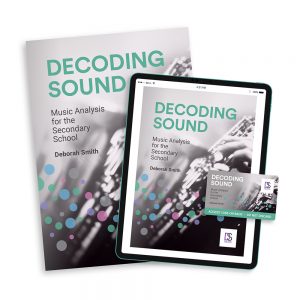
If you already own Decoding Sound, then these are available within your digital resources (alongside more music analysis in-depth looks at character, elements and answering questions!). Otherwise, you can access the four FREE info sheets for each compositional device below, so long as you have a DSMusic account.
And remember…
The best way to build your confidence with music analysis and compositional devices is to listen! The more excerpts you engage with, the more likely you are to be able to identify aurally what’s happening and the effect this has musically. Just like you might have a preferred element to write about (I’m a big fan of articulation and tone colour, myself!) you’ll probably find contrast a great first device with which to start.
Happy analysing! – Deb
-
Step-by-step tips for getting better at rhythmic dictation.
Comments Off on Step-by-step tips for getting better at rhythmic dictation.A question I often get asked by students – especially in the lead up to exams! – is how to do dictations. Here at DSMusic, we’re big on really knowing these concepts, whether it’s scales or intervals, or chords or rhythm.
It’s important to remember that everything you’re doing in a music language space is actually to make you a better musician, not just to pass the next test! So let’s work through some ways to get better at rhythmic dictations, as well as the steps I use.

Sightread lots of rhythms.
This might seem like a simple step but it’s an important one. The more you’re sightreading rhythms – trying to read them for the first time – the more you’ll be able to dictate them. Ideally, rhythms need to be read in rhythm names as this system can be carried across a variety of different groupings and time signatures. An even better extra step is adding conducting to this as well, strengthening both the reading of rhythm and your sense of pulse.
Recognise & Recreate.
Beyond sightreading, we also need to make sure we understand what sorts of things we can expect. As in, analysing and understanding the content, format and structure of rhythms so we’re better able to recognise them. Though this is something that develops through sightreading, as mentioned above, it’s also a great opportunity to get creative. Composing rhythmic ideas takes what you’re hearing and understanding and consolidates it, enhancing your ability to recognise and recreate.
DSMusic Top Tip: Don’t limit your playings – use as many as you need while you’re building this skill.

Rhythm Sets.
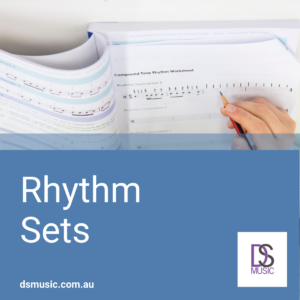
Once you know what to ‘expect’ rhythmically, this helps narrow down your options in a dictation exercise. Rhythm sets are your go-to-guide – they’re all the rhythmic groupings your ears might have to recognise. Noting them down quickly on some manuscript or blank paper before the dictation aids in the process, particularly if you can check a Study Design page for the exact rhythms that can be used. This is also very important preparation for your rhythmic shorthand – and translating how many sounds you heard into the appropriate rhythmic grouping.
Rhythmic Dictation Steps.
Okay, so now we’ve spoken through what you should do to prepare yourself for rhythmic dictation, let’s go over the steps themselves. Remember, this is what works for me so feel free to adjust or ignore – find the approach that best suits you!
- Write your rhythm set – it might be three rhythmic groupings or many more, but it’s your first step!
- Setup your rhythm shorthand above the staff – this would be a single beat stroke in simple time, or beat and pulse strokes in compound time.
- Listen to the rhythm, pointing at your beat/pulse strokes.
- Add rhythmic shorthand for each sound you hear on a beat/pulse – e.g. two lines for two sounds.
- If needed, translate your shorthand onto the staff – try to do this before the last playing.
- For the last playing, listen through and check your answers – remember, try not to leave things blank, use your preparation and understanding of rhythms and guess!
How can DSMusic resources support you?
We’ve got a ready-made Rhythm Set resource for you, so just access it by clicking the image on the right and adjust as much as you need!
Are you in VCE Music? Get yours on this page!
If you’re seeking more support for this step-by-step approach, here’s some free DSMusic videos:
And remember…
There’s no silver bullet when it comes to building these skills – no overnight cramming possible! You have to consistently and sequentially give time and attention to developing your awareness, understanding and confidence.
Happy rhythm-recognising, everyone! – Deb
-
Top 10 Videos for Chords, Chord Progressions & Cadences
Comments Off on Top 10 Videos for Chords, Chord Progressions & Cadences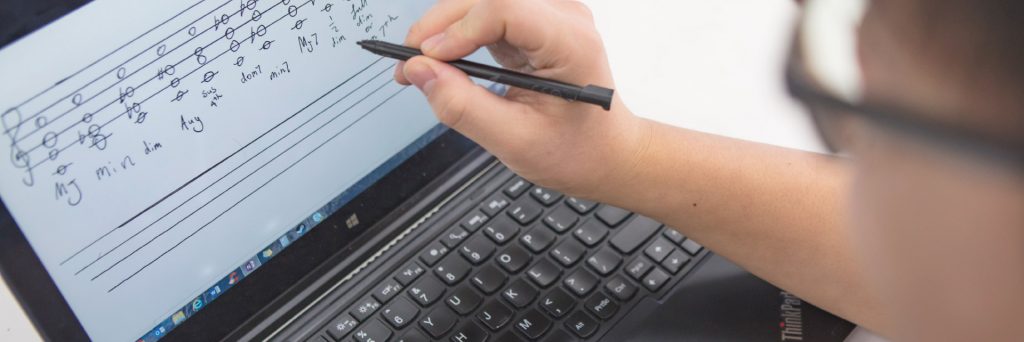
Here at DSMusic, we understand that a lot of what we teach and learn in the music aural and theory space is connected.
While this often means we can practice several musical concepts within the same activity, it can also make step one a little daunting. Concept-wise — chords, chord progressions and cadences definitely fit into this category.
You can’t really get good at aurally identifying cadences unless you understand what they are, why they are there and how they work.
Similarly, how do you track the way harmonic patterns shift if the building blocks of chords and triads are still a little fuzzy for you?
To give you a bit of a starting point, here’s 10 videos that combine teaching, learning and the application of all that — theory into practice.
DEB’S TOP 10 DSMusic Chords, Progressions & Cadences Teaching & Practice Videos
1: Start with the basics.
Try beginning with the concepts of triads (both Major and minor),
with a few primary chords as a focus area. Then treat yourself to a
handy overview of the main types of cadence.
2: It’s all about that bassline.Next up, let’s fine-tune that musical ear of ours by listening for,
singing and recognising the bassline in these progressions.
3: Time to transcribe.We’ve learned, heard and sung, so now let’s take the next step
and work out how we note down what we’re hearing, perfect
for chord progression questions on tests and learning that new
favourite song of yours by ear.
4: Let’s get creative with practice!Now that we’ve got a few videos under our belt, it’s time to use
the skills we’re building and strengthen them, to make sure we
really know chords, chord progressions and cadences!How can DSMusic help?
If these ten videos aren’t quite enough to cover your
chord-related needs, remember there’s a bunch more
available for free, so carve out some time to deep-dive
on the DSMusic Vimeo & YouTube channels!Happy watching! – Deb
-
Top 6 Ways Solfa Can Help You With Music Performance
Comments Off on Top 6 Ways Solfa Can Help You With Music PerformanceWhile we all know that becoming truly musically literate — which is the aim of the game here at DSMusic — lends itself quite well to improving our musicianship and theory skills, all that do re mi also actually applies to the practical side of things too.
That’s right! Solfa isn’t just for when you’re panicking about an upcoming aural and written exam, it’s a really great go-to for strengthening a number of practical capabilities we use as musicians and performers.
Join me as we go through some strategies for incorporating solfa in your lessons, practice sessions and rehearsals, helping link music language and literacy with music making in a meaningful and relevant way.

DEB’S TOP 6 WAYS TO SUPERCHARGE YOUR PRACTICE WITH SOLFA!
1: Sound production & tone.
When supporting students in the early stages of their learning, we try to ensure they have an auditory reference for what a good sound is on their instrument. This might be a recording or another musician, or yourself as the teacher demonstrating for them. In these cases they are using the tools they have — embouchure, diaphragm support, finger placement etc. — to match what they’re hearing. Having them sing the note, sound or tone in solfa before trying to realise it practically is an immediate means for this.
2: Hitting the mark.Producing a good sound or tone is great for notes played sequentially in a scale, but as we’re aware, music performance requires control and precision across the spectrum. Most instruments have to face a change in register, octave, harmonics or position and, depending on the difficulty of this, students could be taking small interval steps or large leaps. As mentioned by Steenstrup et. al, 2021, using solfa to sing these can help improve pitch accuracy.
3: Intonation.Singing and hearing the pitch you’re aiming for is one thing, certainly, but solfa is also useful for the stability and accuracy of that note once you arrive. Is your ensemble struggling to play that held chord in tune? Perhaps the climactic note at the end of a phrase is edging out of the stratosphere somewhat? No problem — get your students to pop down their instruments for a moment and use solfa to sing the chord or final note instead. It’s remarkable how so simple a strategy (and reminder!) can make a huge difference on the overall intonation of the group.
DSMusic Top Tip: Make Singing An Integral Skill – Just Like Practice!
4: Muscling up memory.
Not only is memorisation itself a great practice tool for musicianship generally, it’s also a skill fostered in the actual doing of practice. By that I mean singing scales or pieces/repertoire for music performance in solfa supports memorisation more than if you just listen to a recording or look over the notation. That’s because you’re actively engaged, and consciously aware of the actual notes when you’re singing, independently of the practical challenges that may arise while you’re still learning that tricky bar, phrase or section on your instrument.
5: Solfa sectionals.How often in ensemble rehearsals, sectionals, lessons or practical classes, do we find ourselves working with a particular section or student while others wait? Get those students to sing their parts in solfa (using inner hearing) like you would encourage ‘shadow playing’ or ‘silent practice’. This will give them something engaging and useful to do while you’re off tuning timpani or working out what’s wrong with the bass guitar amp and it might even improve their musical expression.
6: Strengthening sight reading.When sightreading for music performance we apply all the previous strategies. Combining solfa with the act of inner hearing provides audio imagery — that is, being able to see what you hear and hear what you see. There’s often a really close connection between what we’re doing vocally and what needs to happen physiologically on our instrument, particularly if we’re playing brass or woodwind. Solfa sets the scene!
How can DSMusic resources support you?
The best resource for practicing solfa and the skills we’re talking about today is the Music Language Online Course Musicianship Module. It’s got sequential activities across all concept areas and a predominantly aural focus, scaffolding inner hearing and memory too.
In a 1:1 lesson context, work through the activities (10 weeks x 7 days worth!) together, or set for home practice. Wondering how this resource might work in your rehearsal setting? Have the ensemble director use the online course access to kick-start sessions and fine-tune during sectionals with solfa, singing, clapping, conducting and more!
And remember…
Even if your lesson or ensemble isn’t vocal-based (like singing lessons or choir rehearsals) doesn’t mean you can’t intentionalise vocalisation alongside music language and solfa. After all, music performance is the opportunity to take what we really know and apply it in a practical setting to express ourselves and share the magic!
Happy practicing, everyone! – Deb
Steenstrup, K., Trusbak Haumann, N., Kleber B., Camarasa C., Vuust P., Petersen B. (2021). Imagine, Sing, Play- Combined Mental, Vocal and Physical Practice Improves Musical Performance. Frontiers in Psychology Volume 12: https://doi.org/10.3389/fpsyg.2021.757052
Kageyama, N. (2023). Why Singing Could Enhance Your Daily Practice. Bulletproof Musician Blog: https://bulletproofmusician.com/singing-out-loud-embarrassing-ear-training-exercise-or-nifty-memory-hack/
-
Ways to gamify rhythm in your music classroom.
Comments Off on Ways to gamify rhythm in your music classroom.When exams are looming it can be tempting to take what’s needed for test-time and build your music classes around that. Here at DSMusic though, we’re fans of fostering music literacy and as keen on finding a variety of ways to scaffold really knowing these musicianship concepts in your spaces.
You can’t always address these areas through investigation, listening exercises, theory worksheets or sightreading repertoire, so here’s a few suggestions for gamifying rhythm in your classroom.
Rhythm Snake 1.
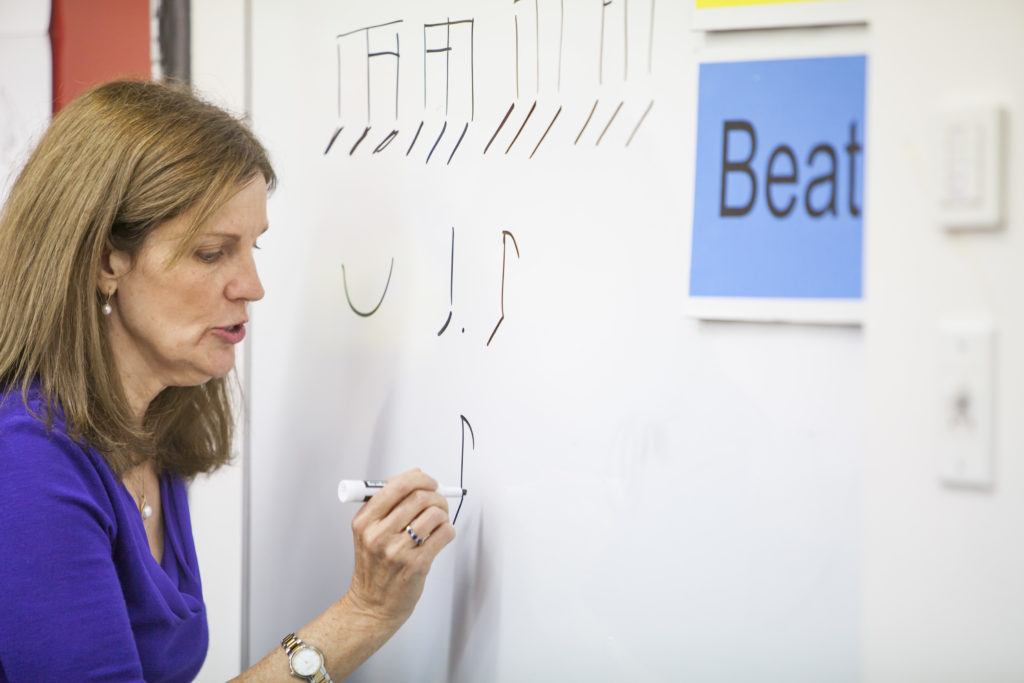
Sit/stand in a circle with your students. Then, clap a four-beat rhythm, which the class claps back while saying rhythm names. Get the student sitting/standing on your left to clap a new four-beat rhythm and have that be what the class claps back in rhythm names. You might scaffold this a little bit for them by having rhythmic ‘options’ visible on the board or on sheets in front of them. This means they’re receiving a visual reminder of each rhythmic grouping but also acts a little like compositional training wheels when their turn arrives.
Rhythm Snake 2.
This builds on the previous game, except the student on your left adds their own four-beat rhythm to yours (eight beats in total). Then, keep moving to the left, with the next student having a go. Essentially, each student claps eight beats in total — four they heard from the previous student and four they create on the spot. The best thing about this game is that they’re fostering an understanding of rhythm, and rhythm names but also furthering their memory muscles, aural awareness and creative chops.
DSMusic Top Tip: Make it sequential — step-by-step.

Rhythm Snake 3 (and the ‘Poison’ version).
Just keep building, just keep building. Take what you’ve established in the previous game and add another four beats. This will mean as we move around the circle, each student claps 12 beats in total while saying rhythm names. You can make this a little easier by reducing how many new beats are required (if four feels too hard, just add one!) but there’s also a way to up the stakes even further.
The poison version of this game is exactly the same except that of the available rhythms, one is removed from circulation. If students use this rhythm, they’re out and the circle snake begins again. For those classes of yours who love a challenge (or are particularly competitive or dopamine-driven!) you can extend this by assigning a particular beat that the poison rhythm cannot be clapped on.
Rhythm Bingo.
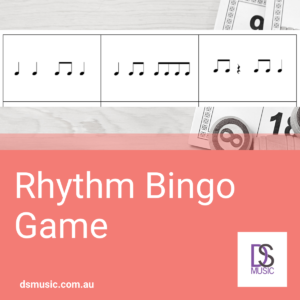
Who doesn’t love bingo? Or at least, bingo gives everyone an equal chance to win, which is always nice. It’s also another example of gamifying rhythm in your classroom and strengthening the understanding of these groupings in notated (and aural) form. Simply hand out sheets of bingo cards (see below) with rhythmic patterns on them. If you’re up for saving paper, best to laminate the bingo card sheets (class set!) and get them to mark each off with erasable markers or by placing a small token down.
Then, you (or a keen student) claps a rhythm from the master sheet that the students then clap back. If they’ve got the rhythm on their sheet they mark it off (and you should cross it off your master too!). The class claps the rhythm again, this time saying the rhythm names, while you (or that super keen student of yours) writes it up on the board. This provides a sure-fire way for the students (and you) to check there’s no dodgy bingo-ing happening. In order to win, a student must have any three groupings on their sheet across, down or diagonally, just like regular bingo.
Need to extend the game a little? No worries — just set the endgame as them having all the rhythms on their sheet.
How can DSMusic resources support you?
The great news is that we’ve pre-made your Rhythm Bingo sheet, so just access it by clicking the image on the right and get laminating!
If you’re seeking more ways to gamify this in your spaces, there’s a bunch of DSMusic FREE clever echo videos available:
And remember…
Whether you use these games as a brain-break activity, a way to warm-up your ensemble or as a dedicated chunk of time for this particular musicianship concept, don’t be afraid to get your students really knowing!
Happy gaming, everyone! – Deb
-
Top 10 Tips for Tackling Music Performance Analysis
Comments Off on Top 10 Tips for Tackling Music Performance Analysis
Here at DSMusic, we’re pretty heavily focused on the music language side of things, and the really knowing.
However, we’re also big fans of music performance analysis — understanding what other performers are doing musically to make us feel a certain way.
We really get lost listening to music and decoding the mysteries behind mood, so to help you get in the zone too, here’s some strategies for you to apply yourself.
DEB’S TOP 10 TIPS FOR TEACHERS & STUDENTS
1: Begin with how it makes you feel.
At the heart of music performance analysis is being able to describe the character or mood of the piece you’re listening to. What expressive outcome does the piece seem to have? How do you feel when you listen to it? If you had to find some words to describe the character, mood or feeling it creates — what would they be? There’s stacks of word lists for just this sort of thing in Decoding Sound, but best of all, there’s no right or wrong answer because feeling in music is subjective.
2: Searching for the right words.Speaking of word lists, its a good idea to start gathering a bunch as a go-to. Angry words, sad words, exciting words and everything in between. Its best if these words are comfortable for you to use because even if what you feel can’t be wrong, you still have to be able to describe and justify it in your answers. Have a go now — see how many words you can come up with to describe the character of this song.
3: Rinse, wash, repeat.Although in exam or testing situations you’ve got a limited number of listens (and time in between to scribble frantically!), while you’re finding your analysis feet, take as long as you need. My trick is to listen at least once without really focusing too much on anything, as this helps me find what mood or feeling resonates. Then, on each listen after that, I’ll pick one element or aspect to focus on. If you can though, best to make your multiple listen tracks the sort of music that won’t annoy you too much the tenth time it’s reverberating through your headphones!
4: Take it one step at a time.Here at DSMusic, we’re big on sequential skill-building, so like I said in the last tip, work on one thing at a time. Typically, (not always!) elements like articulation, texture and tone colour are a great place to start. These focus on the way the performers begin and end their notes, the overall balance, blend and layering of instruments involved and the style or character for the sounds being created. What sort of words would you use to describe the articulation featured in this piece?
5: Open your ears to the possibilities.Listening to music for analysis is different to blocking out the world with your favourite jams. It can be tempting to pop on your go-to tunes all the time, and while these might not be a bad place to start your journey, we encourage you to play around with your playlists. Sure, you mightn’t particularly enjoy every piece you listen to, but remember, your opinion about whether it’s good or not isn’t actually the point. Broaden your musical horizons!
Need a brain break? Brodie does!
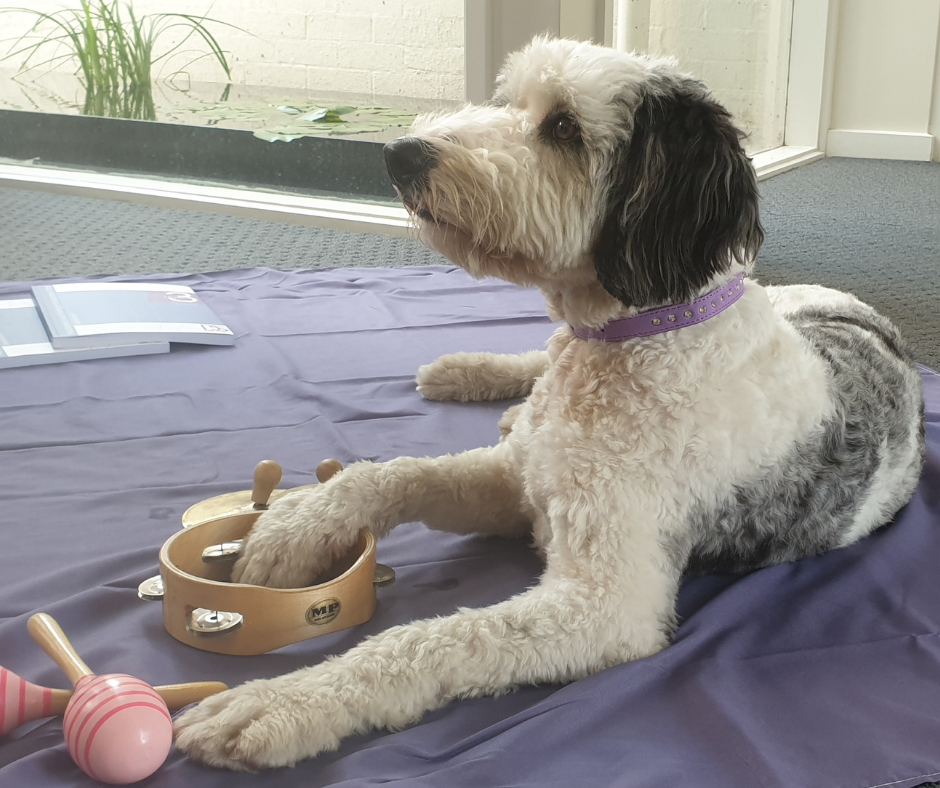
6: Use analysis as a performer.The reason we engage with music performance analysis in the first place is to hear how performers manipulate the expressive elements of music (like articulation and tempo and all the rest) to get us feeling a certain way — so we can do the same! Why not swap the headphones for your instrument/voice every once and a while and see if you can apply some of these same strategies and create your intended character?
7: Write, write, write!Once we get used to listening for specific things, the next step is being able to articulate that on paper, which can be tough. I advise you try and find a process that works for you — dot points, sentences and paragraphs, tables, whatever. Routinely note down what you hear in the way that works for you because like anything, you get better at it the more you practice!
8: Socialise & analyse.One way to help build your world lists but also double-check you can argue well for what you’re hearing and chatting about feeling-wise is to bounce off someone else. Pair up (or organise an analysis squad!) with a fellow listen & interpreter and compare notes. Often two people can hear very different things in the same piece of music so its a great way to expand your own understanding.
9: Carve out some character-charting time.You mightn’t think you need to practice music performance analysis in the same way you do your scales, songs or that stuff for rehearsal, but actually, you do. Set up a schedule, or some structure for listening and interpreting regularly and make sure this gets time during the week in the same way instrument/voice practice (hopefully!) does.
10: Familiarise yourself with elements & devices.This is the last tip because it’s very important – while there’s a great deal of subjectivity with music performance analysis, there’s also some key focus areas. If you’re studying VCE Music, VCAA has a list of compositional devices (like contrast and repetition) and elements/techniques for exploring these (that’s where tone colour and the rest fit) and DSMusic has some freebies to help. Just like your word lists, you need to build a level of familiarity and comfort with these so your ears get really good at noticing them in your listening excerpts!
How can DSMusic resources help you with performance analysis?
Your first stop should always be Decoding Sound — it’s the definitive textbook for teaching, learning and really knowing music performance analysis.
There’s also a wealth of FREE listening examples and sample observations that focus on particular compositional devices for VCE Music, which you can access at the bottom of this page.
Other ways to practice:
- if you’re seeking a more controlled experience that’ll get you (or your students) exam ready, I recommend checking out the relevant sections of the DSMusic Practice Exam, Assessment and SAC material.

Get listening & word-list-building!
After all that, the key takeaways really are to listen to as much as you can, all the time, across different genres, styles, instruments and more. Jot down words, thoughts and feelings as you go so when the time comes, music performance analysis is as easy as do-re-mi.
Happy analysing! – Deb
-
Why singing is key for music teaching and learning.
Comments Off on Why singing is key for music teaching and learning.When I set out to design the DSMusic material, I knew I wanted to create a program that would teach my students to become truly musically literate – to be able to ‘read’ and ‘speak’ music like we do other languages. That is, when we see words written we understand their meaning and we know how they would sound if they were spoken. When we hear words spoken, we again understand their meaning, and we know how they would look when written down.
This approach is based on the belief that good quality music education is for EVERYONE, regardless of background, learning style, ability OR prior learning. It is singing-based, which means there’s no expensive equipment required, no technical or practical difficulties involved in playing instruments and it helps students develop the most direct relationship with music possible.

Let’s chat through some of the other ways this immediacy of singing, a key cornerstone of the Kodály approach, supports what we’re doing in our teaching and learning spaces.
Internalise, memorise and inner hear.
It’s about more than just removing barriers to taking part. Singing also enables the chance to learn and internalise what we’re doing musically. We talk a lot about inner hearing here at DSMusic and singing is step one. Along with inner hearing, singing builds skills in memory and intonation, as well as being a great way to check the accuracy of how rhythm and melody are being internalised.
Let’s get social.
Singing is a super social way to make music! It’s such a joyful and spirit-feeding activity that can help to build social harmony everywhere from classrooms to community choirs. There’s just something special that happens when a group of people come together and sing-–anyone remember the balcony choruses of Italy during lockdowns? One of the things I enjoy most about teaching music is the beauty of a well sung canon by a cohort of students. Beyond this, the singing of Kodály inspired repertoire and the held songs of a variety of cultures, expands our musical worldview.
DSMusic Top Tip: Is your ensemble having trouble with their intonation? Get them to sing their parts first!
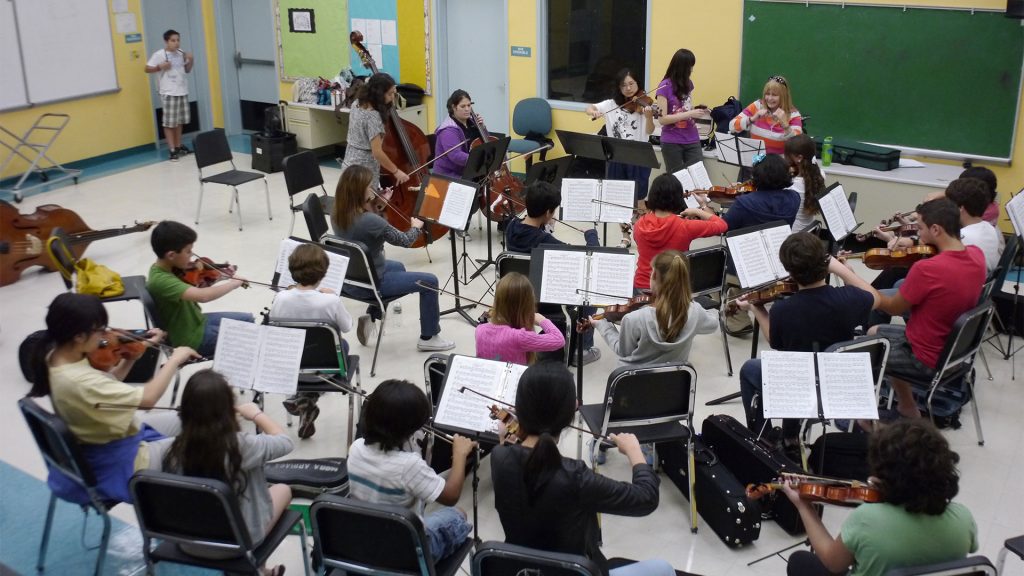
Experience is everything.
Something else that’s key to the teaching of music literacy is the notion that you are ‘experiencing first and internalising second.‘ We do this essentially by incorporating elements of play, absorbing skills and understanding through a variety of interactive exercises designed to move sequentially and incrementally. This experiencing happens instantaneously using sight-singing and sightreading, building the syllables and sentences of music language.
Finding your voice; everyone has the right.
We’ve mentioned already how direct singing is for learning, as well as the fact that there’s no expense like there would be with instruments, but a key element of the Kodály philosophy is this universal right. Every child can learn how to express themselves musically through singing. This helps them literally find their voice, on a fundamental level, which is vital for everything else that follows.
How can DSMusic resources support you?
If you’re looking for more about singing, or how that informs what happens in Kodály inspired practice, check out these videos:
If you’re seeking opportunities to get singing in your spaces, there’s a bunch of DSMusic songs, canons and games available:

And remember…
What we’re doing in these spaces is more about using singing to help us teach, learn and make music, as opposed to creating a bunch of professional singers. Sometimes we can feel subconscious about how we sound, or feel that we’re ‘instrumentalists and not singers’, but as the Kodály inspired approach tells us; we’re actually both!
Happy singing, everyone! – Deb
-
Melodies, musicianship & mindfulness.
Comments Off on Melodies, musicianship & mindfulness.
Top 10 Videos for Aural & Theory Concepts!
We know preparing, practicing and really knowing music aural & theory can be a bit challenging because we don’t really know where to start. To support all the great music-making happening around us, we’ve put together a top 10 list to point you in the right direction.
Check out some resources and content you might have missed around the DSMusic space recently.
RESOURCE ROUND-UP
Major Melody 1
in Letter NamesHow do you manage learning new notated material?
Sightreading is an ongoing skill that needs attention and intention in music, so why not join me for a quick look at a Major Melody in letter names?
Ways to Practice
How many times do we just throw that pesky “p” word around? Practice, just like everything else we do musically, is a skill that needs deliberate focus and attention, so we’ve popped a list of ideas in this blog article for you!
Rhythmic Clever Echo
In this FREE practice resource, students are shown a variety of Rhythmic Clever Echo activities designed to foster their ongoing music aural and rhythmic recognition skills.
CURATED CONTENT

Music & Mindfulness
Gideon, a professional drum tutor based in London, teaches mindfulness-based stress reduction programs. Music and mindfulness definitely intersect, so have a read of his article and see what you think.
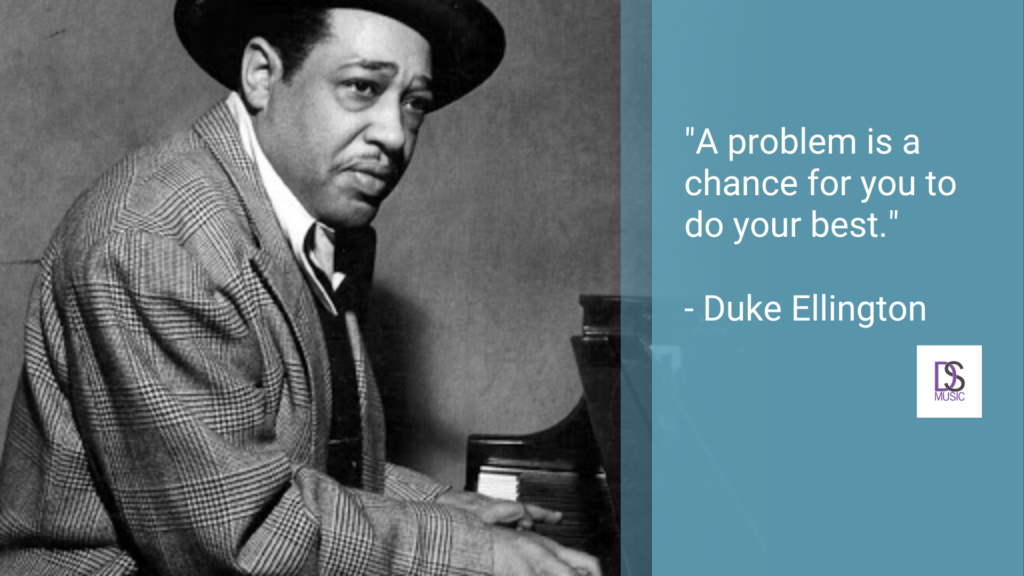
Duke Ellington Quote
Some terrific perspective from a musical legend. How has music taught you to keep trying no matter what?
Strategies for Reading
This article outlines some practical steps to aid in the process of sightreading. We suggest for step 3: inner hear the rhythm names while tapping the beat, then before step 5: sing the solfa and for step 5: SING the letter names!